
Loading...
Serving Glendora, CA and surrounding areas. (626) 640-8959
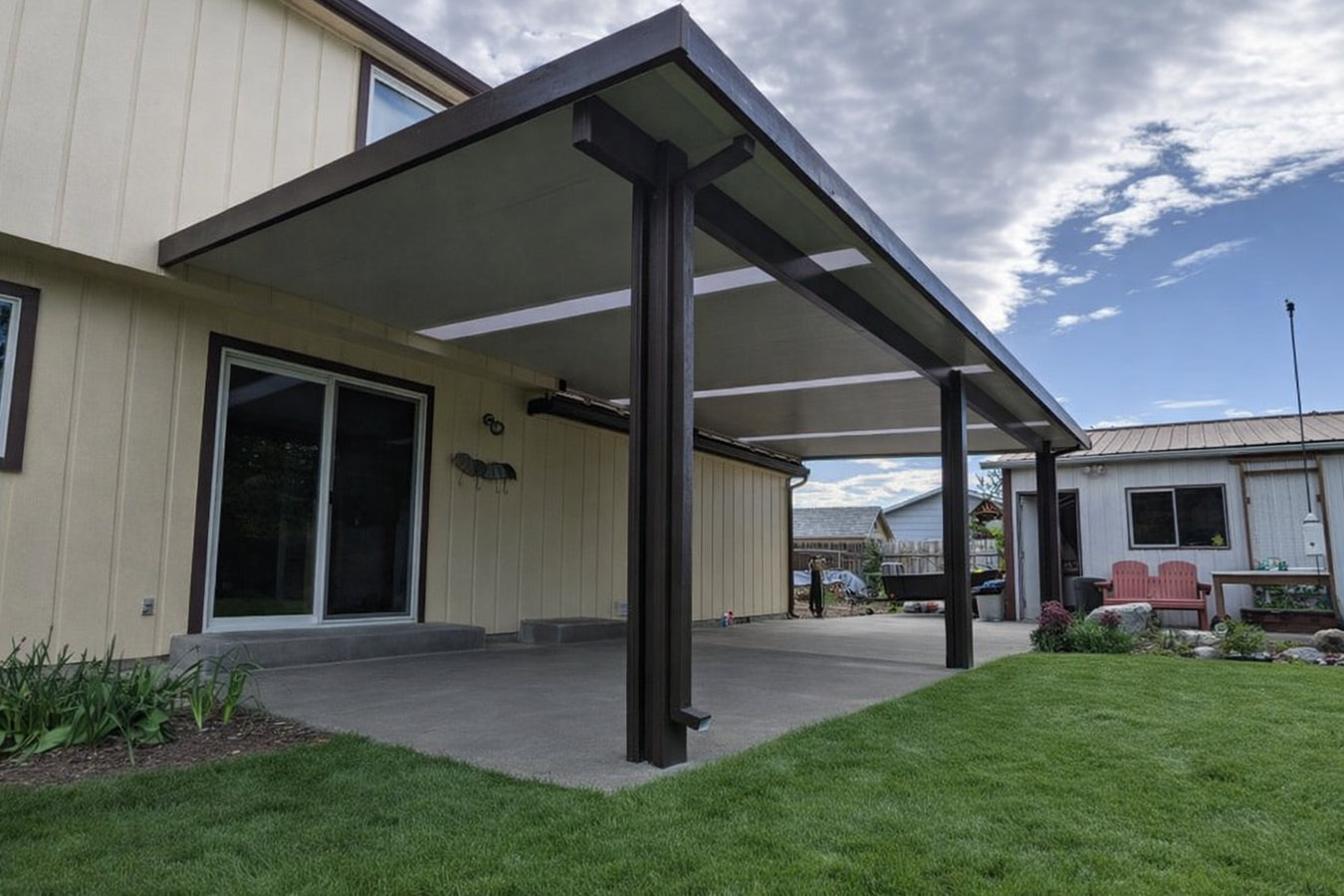
Get a permitted, wind-rated patio cover that makes your backyard usable again - built for Glendora summers and Santa Ana wind season, with full project management from estimate to inspection.
Patio cover installation in Glendora attaches a permanent shaded roof structure to your home over an existing patio slab, making the space usable during the hottest part of the day without requiring you to build a fully enclosed room - most installations take two to three days of construction once permits are in hand.
In a city that sees temperatures regularly in the mid-90s from June through September, a solid-roof patio cover is often the most practical first investment in your outdoor space. It protects your patio furniture, cuts the heat off your slab so it does not radiate back up at you in the evening, and makes the transition from indoors to outdoors comfortable enough that you will actually use it. If you are wondering whether a patio cover is a better starting point than a fully enclosed room, read about patio enclosures and sunroom design to understand the full range of options before you commit.
A properly built patio cover in Glendora also needs to handle the Santa Ana wind season. Posts need to be set in concrete footings, not just surface-mounted, and the ledger board where the cover attaches to your house wall must be correctly flashed so water cannot sneak behind it into the wall. These are not premium add-ons - they are the minimum for a cover that holds up and does not create problems down the road.
If you walk outside between 10 a.m. and 6 p.m. from June through September and immediately turn back because of the heat, your outdoor space is not working for you. Glendora's summer sun is intense enough that even a shaded chair feels uncomfortable without overhead cover. If your backyard is essentially off-limits for half the year, a patio cover is the most direct fix.
Fading cushions, cracked plastic furniture, and a grill rusting faster than it should are all signs your outdoor space is taking a beating from direct UV exposure. In the Inland Valley climate, unprotected outdoor furniture has a noticeably shorter lifespan than the same items kept under cover. If you are replacing cushions or furniture every two to three years, a patio cover will pay for itself in reduced replacement costs.
If you see dark streaks or bubbling paint on the wall above your patio door after a winter rainstorm, water is finding its way in. A properly installed patio cover with good flashing can redirect that water away from your house. This is worth paying attention to in older Glendora homes where the original stucco may have small cracks that let water in during the heavier winter rains.
Southern California buyers consistently rank outdoor living space as a top priority, and a bare concrete slab with no shade structure reads as unfinished to many buyers. A permitted patio cover signals the home has been thoughtfully improved and gives buyers a reason to picture themselves using the space. If you are thinking about listing in the next one to three years, this is one of the higher-return improvements you can make.
We handle the permit application, HOA submission if required, post footings, ledger attachment, roofing, and any electrical work for lighting or ceiling fans - all under one project so you are not coordinating separate contractors. Homeowners who want to take the next step after a patio cover and enclose the space into a full room should read about our patio enclosures work - a cover can serve as the roof structure for a future enclosure, which is worth planning for at the design stage even if you are not ready to enclose right now.
We also work with homeowners who want a more finished outdoor space with specific design features - different beam profiles, colors, or integrated lighting plans. If you are thinking about a coordinated outdoor design rather than a simple shade structure, our sunroom design process can include patio cover design as part of a broader plan for your backyard space.
Best for homeowners who want maximum shade and protection from both sun and light rain - the most popular choice in Glendora's climate.
Suited to homeowners who prefer filtered light and a more open, garden-like feel while still reducing direct sun exposure.
Ideal for families who want to use the space after dark or extend comfortable outdoor time into the warmer evenings of late spring and summer.
A thoughtfully staged approach for homeowners who want shade now and the option to add walls and windows later without starting over.
Glendora sits in the Inland Valley with summer highs that regularly push into the mid-to-upper 90s, and every fall the Santa Ana winds arrive - powerful gusts that can exceed 60 mph in the foothills. A patio cover built here has to handle both: the UV exposure that fades and warps inferior materials, and the wind loads that will test every post, beam, and fastener. That means properly sized posts set in concrete footings below grade, a ledger board flashed so water cannot get behind it, and hardware rated for high-wind conditions - not just surface-mounted posts and a ledger screwed into stucco. We have completed projects across Glendora and in nearby Covina, where the same Inland Valley conditions apply.
Many of Glendora's established neighborhoods - particularly homes built in the 1950s through 1970s - have stucco-over-wood-frame construction that requires careful attention where a patio cover ledger attaches to the house wall. Improper attachment to older stucco is one of the most common causes of water intrusion and wall damage in patio cover installations in this area. We inspect the wall condition before we commit to an attachment method, and we include the flashing and waterproofing work in the proposal rather than treating it as an extra. We also serve homeowners in San Dimas who face the same older housing stock and local wind conditions.
For independent guidance on contractor licensing - including how to look up whether a contractor is licensed, bonded, and complaint-free in California - the California Contractors State License Board provides a free license lookup tool that takes about 30 seconds to use and is worth checking before signing any contract. For community association guidelines on exterior improvements, the Community Associations Institute has plain-language resources on homeowner rights and HOA review processes.
We ask about your patio size, HOA status, and what you want the space to feel like - then we schedule a home visit. We measure the space, look at your wall and existing slab, and give you a written estimate within a few days. We reply to all inquiries within one business day.
Once you sign, we prepare the HOA architectural submission if required and pull the city permit from Glendora's Building and Safety Division. Plan check typically takes two to four weeks. We track both reviews and keep you updated throughout.
The crew digs and pours post footings on day one, sets the ledger board against your house wall with proper flashing, then installs beams and roofing. Most standard covers are fully framed and roofed within two to three days. A city inspector checks the framing before the roof goes on.
Once the inspector signs off and any electrical work is complete, we walk you through the finished cover, show you how any moving parts work, and make sure the area is fully cleaned up. Ask us for a copy of the permit sign-off to keep with your home records.
We handle the permit, the HOA submission if needed, and give you a written estimate that breaks out every cost before you commit to anything.
(626) 640-8959Every cover we install in Glendora is sized and engineered for the wind conditions this area sees every fall. That means proper post footing depth, beam sizing, and hardware rated for high-wind conditions - not the minimum required for calm weather. A cover that wobbles after the first Santa Ana is a cover that was not built for this area.
We pull your city permit from Glendora's Building and Safety Division before a single footing is dug. That means a city inspector checks the framing and the final work - giving you independent verification that the cover was built correctly. Any contractor suggesting you skip permits is a contractor worth walking away from.
Many of Glendora's planned neighborhoods have architectural review committees with specific requirements on color, material, and style. We prepare the full HOA application package on your behalf, including drawings and written descriptions, and we know from experience what these committees typically approve in this area.
Glendora homes built in the 1950s through 1970s need careful flashing and waterproofing where a ledger attaches to the house. We inspect the wall condition before choosing an attachment method and include the waterproofing work in the written proposal - not as a mid-project extra. The National Association of Home Builders outlines why proper ledger attachment matters for any attached patio structure.
Building a patio cover in Glendora is not complicated when the contractor knows the local permit process, the HOA landscape, and what the climate demands of the materials. That local knowledge is what separates a cover that lasts twenty years from one that needs attention by year three.
Plan a complete outdoor living space with custom layouts, materials, and features before any construction begins.
Learn MoreTake the next step after a cover by adding walls and windows to create a fully enclosed year-round room.
Learn MorePermit slots fill up fast in spring - locking in your project now means your cover is ready before the summer heat arrives.