
Loading...
Serving Glendora, CA and surrounding areas. (626) 640-8959
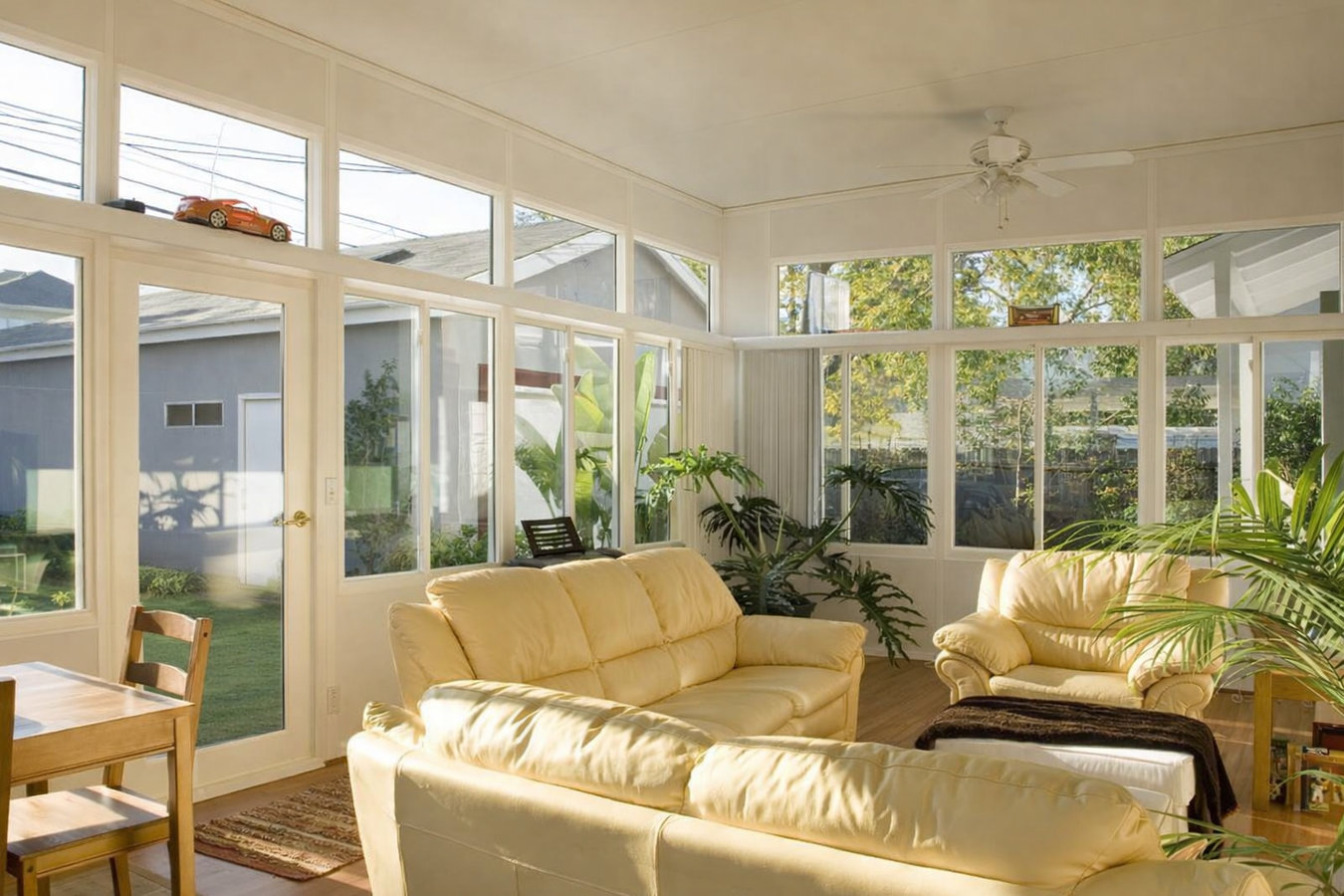
Vinyl-framed sunrooms built for Glendora summers and Santa Ana wind season - heat-blocking glass, proper anchoring, full permits, and HOA handling so your new room is legal, comfortable, and low-maintenance from day one.
Vinyl sunrooms in Glendora, CA deliver an enclosed, weather-protected room using vinyl frames that resist moisture, UV exposure, and temperature swings without rusting or needing to be repainted - most installations take three to seven days of on-site work once the permit is approved.
For homeowners who want to reclaim a backyard that has been sitting unused because of summer heat, insects, or wind, a vinyl sunroom solves the problem more completely than a patio cover or screen enclosure. Vinyl frames hold up well in Glendora's climate - the UV exposure that fades and warps wood or cracks older materials barely affects them, and a wipe-down with a damp cloth is generally all the maintenance you need year after year. If you are still thinking through what type of room fits your needs, our sunroom additions page covers the full range of structures we build and what drives the decision between them.
The glass you choose matters just as much as the frame material. In Glendora, a south- or west-facing room with the wrong glass becomes uncomfortable from June through September - which is exactly the outcome a sunroom is supposed to prevent. Heat-blocking glass, often called low-e glass, keeps the room cool without blocking the light. We walk every homeowner through the glass options at the estimate visit. If you want to go deeper on the design decisions before starting construction, our three season sunrooms page explains how to think about room type before committing to a build.
If your backyard patio is comfortable for maybe two or three months but too hot, too bright, or too exposed the rest of the time, a sunroom solves that problem by giving you a protected space you can actually use. In Glendora's climate, an open patio can be brutal from late May through September - a sunroom with the right glass lets you reclaim that space without giving up the light and view.
If the structure over your back patio is sagging, rusting, or letting in rain, it is already doing more harm than good. Rather than patching something that has outlived its purpose, many Glendora homeowners find it makes more sense to replace it with a proper sunroom that adds real value to the home and eliminates the recurring repair costs.
If every wind event leaves your patio furniture scattered and your outdoor space covered in dust and debris, that is a sign your backyard needs a more protected structure. A properly anchored vinyl sunroom gives you a space that holds up to those conditions while still feeling open and connected to the outdoors.
Glendora's real estate market is competitive, and a permitted sunroom adds livable square footage that shows up in your home's listing. If you are thinking about selling in the next few years, a sunroom built to code and properly permitted is an investment that can make your home stand out to buyers who want that indoor-outdoor California lifestyle.
We handle every part of the project from the estimate visit to the final city inspection - foundation assessment, permit application, HOA submission if your neighborhood requires it, site preparation, frame assembly, glass installation, and weatherproofing at the roofline. You are not coordinating subcontractors or chasing the permit office. Homeowners who want to add a room that goes beyond a standard vinyl enclosure - custom sizing, integrated heating and cooling, or specific design features - will find the best match in our sunroom additions service, which covers the full range of construction approaches we use.
We also assess your existing slab or patio foundation during the estimate visit - a step that often gets skipped by contractors who quote based on photos or general measurements. Many Glendora homes built in the 1950s through 1970s have older concrete that needs leveling or reinforcement before a sunroom can go on top. Catching this before the contract is signed keeps your project on budget. If you want to think through the design options in more detail before committing to a build type, our three season sunrooms page helps you understand the difference between enclosure types and what suits Glendora's climate best.
Best for homeowners who want to use their space in spring, summer, and fall - built without full insulation but comfortable for ten or more months of the year in Glendora's mild climate.
Suited to homeowners who want to use the room year-round and connect it to their home's heating and cooling system for true all-weather comfort.
The right choice for south- or west-facing rooms in Glendora where afternoon sun would otherwise make the space unusable in summer without significantly higher cooling costs.
For homeowners whose current patio cover or screen room has aged out - replacing the whole structure rather than patching it tends to be more cost-effective and adds lasting value.
Glendora sits in the eastern San Gabriel Valley, where summer temperatures regularly climb into the mid-90s and the mountains trap heat in the valley. A vinyl sunroom that ignores sun orientation and glass selection will be a room you avoid from June through September - which is not what you paid for. Every project we do in Glendora starts with an assessment of which direction the room will face, because a south- or west-facing room needs different glass and roof design choices than one facing north or east. We also work regularly in nearby Covina, where the same heat conditions apply and the same glass decisions matter. The U.S. Department of Energy's guidance on window types and technologies is a useful reference for understanding how vinyl-framed systems compare on energy performance.
Santa Ana wind events are a real structural test for sunrooms in this area - frames that are not properly anchored to the home's structure develop rattles, gaps, and leaks after a few strong wind seasons. We anchor every installation to meet local wind-load requirements and seal the roofline connection properly so water cannot get behind the panels during winter rains. We apply the same approach in Azusa, just a few miles west, where the same wind and heat conditions shape every project. HOA restrictions are also common in many Glendora neighborhoods - particularly in the newer developments in the north and east parts of the city - and we review those requirements before any permit is filed so the project does not hit a stop-work order after construction has started.
We ask a few questions about your yard, your existing patio, and what you want the room to do. This helps us arrive at your home ready to assess the right options - not to sell you a room size that does not fit. We respond to all inquiries within one business day.
We measure the build area, inspect your existing slab or foundation, and walk through glass and room-type options with you on-site. This is the right time to ask about HOA requirements, permit timelines, and what the project will cost in total - including permits, foundation prep, and any electrical work.
Once you approve the design and sign the contract, we submit the permit application to the City of Glendora's Building and Safety Division. Plan review typically takes a few weeks. We handle the paperwork and keep you updated - you do not need to manage the back-and-forth with the city.
We prepare the foundation, assemble the vinyl frame and glass panels on-site, and weatherproof the roofline connection. The city inspector visits to confirm the work meets code, and we do a final walkthrough with you - checking every door, window, and seal before we leave the job site.
Free in-home estimate. No obligation. We visit your home, review your HOA guidelines, and give you a written quote that includes permits, foundation prep, and everything else - no surprises.
(626) 640-8959We assess which direction your sunroom will face before recommending a glass type - because a west-facing room in Glendora needs different glass than one facing north. Getting this decision right at the estimate stage means a room you actually use in summer, not one you close up from June through September.
We submit the permit application, manage the city's plan check process, and schedule all required inspections as part of the job. An unpermitted sunroom creates problems when you sell or refinance - we never suggest skipping this step, and we have the experience to navigate Glendora's process efficiently.
We look at your existing slab or patio surface during the estimate visit and include any needed leveling or prep work in the quote. Many Glendora homes built before 1980 have older concrete that needs attention before a sunroom can go on top - finding this out before signing is far better than discovering it mid-project.
Every frame we install is anchored to meet local wind-load requirements, and the roofline connection is sealed to prevent water intrusion after heavy rains. The National Association of the Remodeling Industry at nari.org notes that weatherproofing and structural anchoring are among the most common points of failure in sunroom installations - we treat these as non-negotiable requirements, not upgrades.
A vinyl sunroom is only as good as the contractor who installs it. We have built rooms across Glendora and the surrounding San Gabriel Valley, and the standard we hold to on every project is one we would be comfortable showing to a neighbor: permitted, properly anchored, sealed against wind and rain, and matched to the sun conditions of that specific yard.
For homeowners who want to explore all construction approaches - stick-built, modular, and vinyl - before deciding which type of room addition fits their home and budget.
Learn MoreA closer look at three-season enclosures for homeowners who want to understand how they compare to four-season rooms before choosing a build type.
Learn MorePermit slots fill up - the sooner we submit your application, the sooner you are enjoying your new room. Call or send a message and we will schedule your free estimate within the week.