
Loading...
Serving Glendora, CA and surrounding areas. (626) 640-8959
Premier Glendora Sunrooms & Patios brings solarium installation, sunroom additions, and patio enclosures to Claremont homeowners. We have been serving San Gabriel Valley and Pomona Valley communities since 2015, and we pull every permit directly through the City of Claremont Building and Safety Division.
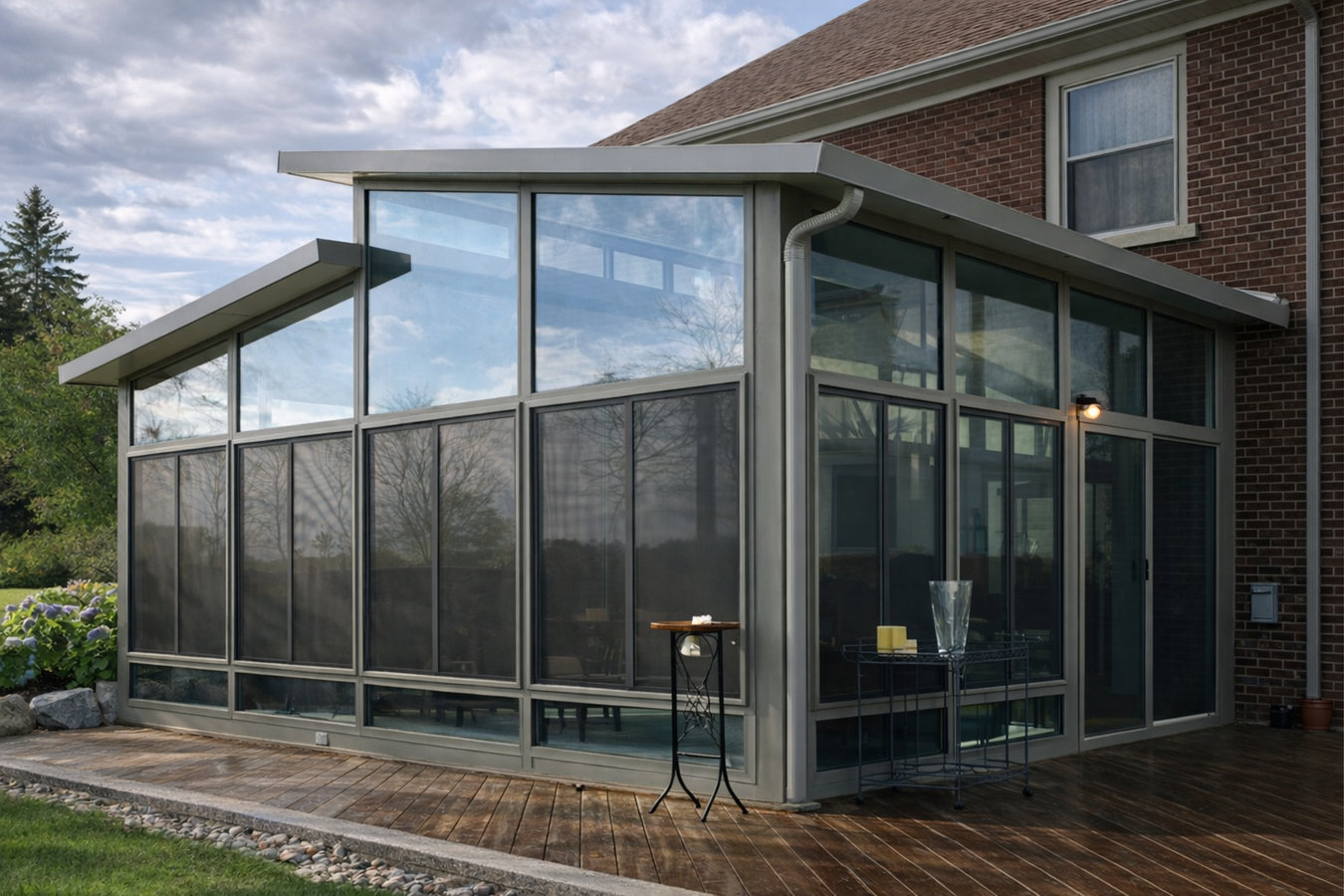
Claremont gets over 280 sunny days a year, and a properly glazed solarium lets you capture that light without the heat that standard glass would bring indoors. The key is selecting the right low-emissivity glass system for inland Southern California conditions. See our full solarium installation page to understand how we spec the glass for this climate.
Claremont winters drop close to freezing on some nights, and summers push past 100 degrees. A four season room with insulated framing and a ductless mini-split gives you a comfortable space in January and July - the older craftsman homes near the Claremont Colleges benefit especially from this kind of enclosed, climate-controlled addition.
Many Claremont homes have concrete patios that were poured decades ago and are now due for assessment before any enclosure work begins. If your slab has shifted or cracked - common on older properties near the foothills where drainage and clay soils cause movement - we evaluate and address that before framing anything on top.
During Claremont's mild spring and fall months, a screen room is the most practical way to use the backyard - especially near the tree-lined streets close to The Village, where leaves and debris blow in constantly. It is also a sensible starting point before deciding whether to upgrade to a fully enclosed glass room.
Claremont has a high rate of long-term homeownership, and families who plan to stay tend to invest in space they will actually use. A sunroom addition built onto a craftsman or Spanish Colonial Revival home adds square footage without disrupting the character of the existing structure when the design is handled correctly.
Vinyl framing holds up well in Claremont's intense UV exposure without the maintenance that wood requires. For homeowners with stucco or painted wood-trim homes who want a low-maintenance exterior finish on the addition, vinyl profiles can be matched to complement the existing house color and trim.
A significant share of Claremont homes were built between the 1920s and 1960s, particularly in the neighborhoods closest to the Claremont Colleges. That age range means original patio slabs, aging foundation connections, and exterior stucco that may have been repaired multiple times. Before any sunroom or solarium can be built, the existing structural conditions need to be understood - a contractor who skips that step is setting you up for problems. Claremont also sits in the Inland Empire climate zone, where summer temperatures regularly climb past 95 degrees Fahrenheit, and the foothills location means additional wind exposure during Santa Ana events in fall and early winter.
Homes in northern Claremont near the base of the San Gabriel Mountains sit in or near fire hazard severity zones designated by CAL FIRE. That affects roofing material choices and, in some cases, the vent and glazing specifications that can be used. A contractor familiar with this part of the San Gabriel Valley will know which requirements apply and how to design an addition that meets them. The combination of older housing stock, intense UV and heat, and fire-adjacent conditions makes Claremont a market where local contractor knowledge is worth more than a low bid from someone who has never worked here.
Our crew works throughout Claremont regularly, and we understand the local conditions that affect sunroom contractor work here. We pull permits through the City of Claremont Community Development Department, and we are familiar with the plan check and inspection process they run for room additions and patio enclosures in this city.
Claremont has a distinct character that varies between neighborhoods. Homes near The Village and the Claremont Colleges tend to be older craftsman bungalows and Spanish Colonial Revival houses with stucco exteriors and clay tile roofs. Those homes require care around how a new addition connects to the existing structure, particularly at the roofline and foundation. Further north toward Thompson Creek Trail and the foothills, homes shift to larger, newer stucco ranches built in the 1980s and 1990s - a different set of considerations, but still very different from a standard cookie-cutter suburb. We know both.
We also work regularly in the surrounding Pomona Valley communities. If you have family or neighbors in Pomona just to the south, or in La Verne to the east, we cover those areas as well. Knowing the permit offices and property conditions across this part of the valley means we can scope your project accurately from the first visit.
We respond to every inquiry within one business day. When you call or send a contact form, tell us the rough size of the space and whether you have an existing patio slab - that information helps us schedule the right amount of time for the site visit.
We visit the property, assess the existing slab and foundation connection, and measure the space. You receive an itemized written quote with no obligation - if there is prep work needed on an older slab before we can build, we tell you upfront rather than after work has started.
Once you approve the quote, we submit permit applications to the City of Claremont and order materials. Plan check typically takes two to four weeks - we track the status and keep you updated so you are not left wondering.
Construction runs three to eight weeks depending on scope and complexity. Inspections happen at city-required milestones. When the work is done, we walk through the finished room with you before we close out the permit.
We serve Claremont homeowners from The Village neighborhoods to the foothills. Call us or send a message and we will respond within one business day.
(626) 640-8959Claremont is a city of about 36,000 people at the eastern edge of Los Angeles County, just below the San Gabriel Mountains. It is best known for the Claremont Colleges, a consortium of seven nationally recognized institutions that defines much of the city's character and identity. The neighborhoods immediately surrounding the colleges - lined with mature trees and filled with craftsman bungalows and Spanish Colonial Revival homes built between the 1920s and 1950s - are among the most distinctive residential areas in the eastern San Gabriel Valley. These homes are well maintained and owned by long-term residents who invest in their properties. To the north, newer stucco ranch homes from the 1980s and 1990s sit closer to the foothills and Thompson Creek Trail. Together, they represent two very different types of housing stock within a relatively small city.
Downtown Claremont is anchored by The Village, a walkable commercial district with restaurants, shops, and historic buildings that draws residents from across the eastern San Gabriel Valley. The city has a distinctly small-town feel despite sitting in the heart of the greater Los Angeles metro area. Claremont borders Pomona to the south and east, and shares the foothill corridor with La Verne to the west. Homeowners throughout all three cities have similar housing characteristics and similar sunroom and patio needs.
Full-service sunroom construction from foundation to finishing touches.
Learn MoreWe serve homeowners throughout Claremont - from the craftsman blocks near the Colleges to the foothills. Call now or request a free estimate and we will be in touch within one business day.